

Blog
Are Cybersecurity Marketers Overusing Gated Content?

You know the feeling. A campaign hits its lead target, the dashboard turns green, and three weeks later sales hands half of it back. Some emails bounced. The rest resolved to real people who never wanted a call. The gate did its job. That's the problem.
The gated-versus-ungated debate is exhausted, and you've sat through every round of it. So let's skip the part where someone declares the form dead. It isn't. The question worth your time is where the gate belongs, and whether yours sits on a buying signal or on a quota.
Article Summary:
Gating by default is the real failure. Decide each asset on two axes, buyer intent and funnel stage, instead of asset type or this quarter's lead target. Gate where high intent meets a late-stage asset. Open everything else and read interest from behavior.
Key takeaways
- Most "lead quality" problems are gate-placement problems, not content problems.
- Cybersecurity buyers research anonymously and screen hundreds of pitches a month, so a misplaced gate costs more here than almost anywhere.
- Measure gates on accepted pipeline, not form fills, or you'll keep rewarding the wrong behavior.
The gate is rising, and that's not the good news it sounds like
The inconvenient part: gated content isn't fading. NetLine's 2025 figures put gated registrations up almost 84% since 2020, with nearly 8 million of them in a single year. Marketers are gating more, not less.
At the same time, the leads are getting worse. Median MQL-to-SQL conversion across B2B slid from 13% in 2024 to 9.8% in 2026, on Forrester and Demand Gen Report numbers. Roughly a third of leads bought from third-party vendors this year are outright fraudulent. And only 62% of people who fill out a form ever open the thing they asked for, by Vidyard's count.
Put those together and the picture is clear. We're gating more than ever, and placing those gates worse than ever. The form has become a reflex, dropped in front of content because that's how a lead gets counted, not because the visitor was anywhere close to buying.
What actually deserves a form
The old test still works: would you hand over your own work email for this? If the honest answer is no, you're collecting fake addresses and calling them pipeline. Buyers worked this out years ago. One marketer called the form a "necessary evil" and described the snarky throwaway emails people leave on the way through. You've seen them in your own CRM.
The email test is only half of it, though. The sharper filter is value and timing together. A form earns its place when two things are true at once: the asset gives the buyer something they can't get free elsewhere, and the buyer is far enough along to want a conversation anyway.
That second condition is where most programs fall down. A benchmark report, an ROI model, original research, a live webinar: these clear the value bar. Generic ebooks, "ultimate guides," and 101-level explainers don't, and gating them taxes the exact people most likely to share your work. David Meerman Scott has noted that ungated content gets downloaded 20 to 50 times more often than the same asset behind a form. For top-of-funnel material, that reach is the whole point.
Ungated vs gated, by use case
Strip away the theory and it comes down to what each piece is for.
Ungate anything whose job is reach or trust: blog posts, points of view, how-it-works explainers, most case studies, podcasts. This is your discovery layer, and it has a second job now. Around 89% of B2B buyers fold AI-generated answers into their research, and an AI engine can only cite what it can read. Gate that content and you go invisible to the tools your buyers reach for first.
Gate the assets a serious evaluator expects to register for: webinars, demos, deep technical reports, proprietary data, interactive tools. Here, the registration is itself a signal. When a buyer expects a gate, it confirms intent instead of repelling them. Your content syndication program belongs in this column too, and that's fine. Syndication gates high-value content aimed at people far enough along to trade an email for it. That's the model working, not breaking.
The trap is treating the whole library the same way. Cybersecurity makes that trap expensive. This is the costliest category in B2B to generate a lead, around $418 on average, against deal sizes near $94K. The buyer is a skeptic who has heard every "next-generation" claim and trusts none of them. Security leaders report screening hundreds of cold pitches a month and ignoring nearly all of them. As one product marketing analysis put it, these buyers are "anti-irrelevance, not anti-vendor." They'll happily read your work. They just won't pay for it with a form they didn't expect.
Progressive conversion paths
The choice was never gate or don't gate. It's how much to ask, and when.
Progressive profiling is the practical middle. Ask for an email on the first exchange. Recognize the visitor when they come back, and ask for one more field: role, company, the problem they're chasing. You build the record across several visits instead of demanding it all up front, where long forms crater conversion. Single-field forms convert close to three times better than four-field ones, by Unbounce's benchmarks. Every box you add is a tax, so be sure it's worth charging.
The rest of the path is signal, not forms. Most of the buying journey is invisible. Gartner finds B2B buyers spend just 17% of their time with suppliers at all; the other 83% happens in the dark, across review sites, peer Slacks, and search. By the time someone fills out anything, Forrester says 92% already have a vendor in mind and 41% have a favorite. The work of shaping the shortlist happens before the form, out in the open.
So the modern path looks less like a wall and more like a ramp. Ungated content earns attention and feeds the AI answers and search results buyers start with. First-party signals (repeat visits, a pricing-page view, three downloads in a week) tell you who's warming. Then, and only then, the gate appears, on an asset that matches where they are. Intent-sourced leads close at 18.7%, against 5.5% for cold list matches, on 6sense and Demandbase data. The ramp converts. The wall just collects names.
A smarter gating model
The whole thing fits on one grid. Two axes: how much intent the visitor is showing, and what stage the asset serves. The gate decision falls out of where they meet.
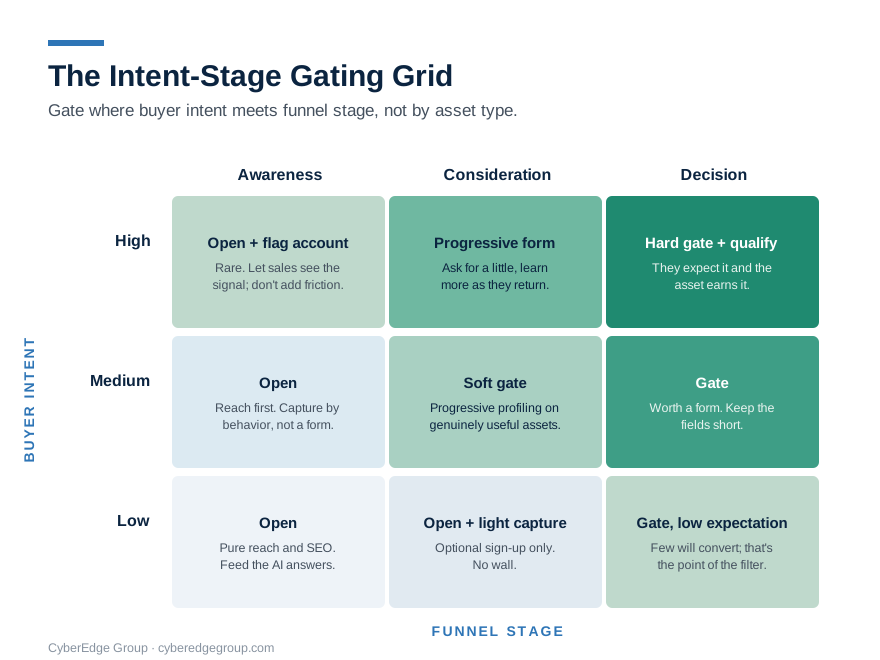
- Low intent, early stage: open it. This is reach. Capture interest through behavior and retargeting, not a form.
- Medium intent, mid stage: open with progressive profiling, or a soft gate. Ask for a little, learn as they return.
- High intent, late stage: gate it, and qualify properly. The buyer expects it and the asset earns it.
The same whitepaper can sit in two cells at once. Open to a first-time reader who found it through search. Gated to an account that's hit your pricing page three times this week. Asset type was never the right axis. Intent and stage are.
None of this survives contact with a CMO who still grades marketing on raw lead count. That's the real obstacle, and it's a measurement problem wearing a content problem's clothes. Ungate without changing the scoreboard and, as one demand team put it, leadership "will see a rapid drop in leads and presume the worst." So change the scoreboard first. Report accepted pipeline, ICP match rate, and MQL-to-SQL, with lead volume demoted to a supporting number. The story you want is the one where fewer leads converted better, not the one where a green dashboard hid a quarter of dead names.
Forrester's guidance for years has come down to three words: gate later and less. The teams pulling ahead aren't buying more leads. They're placing fewer, smarter gates, and watching what happens after the form instead of celebrating the form itself.
Cybersecurity marketers aren't overusing gated content so much as misplacing it. Move the gate to where intent and stage actually live, and it stops being a tollbooth on your best work. It starts doing the one job it was always meant to do: telling you who's ready to talk.
